Friday, August 5, 2011

Tsa´chila "Tolon-Pele"

Beautiful sunset at the Tsa´chila Village.

Such an interesting culture, we feel we have met new friends. The tatoo looking stripes are for protection. They are painted on using juice from a plant, they go on clear and darken in the sun, they usually last about 7-10 days.


Dancing seems to be a large part of most cultures, again we are dancing with the natives.


Toddlers are kept in this "play pen" while mothers are busy cooking or doing other chores. This protects them from getting into the fire or wandering off.


This may be the original baby swing. The baby is placed in the cloth that is tied to a tree limb which can be bounced or swung.
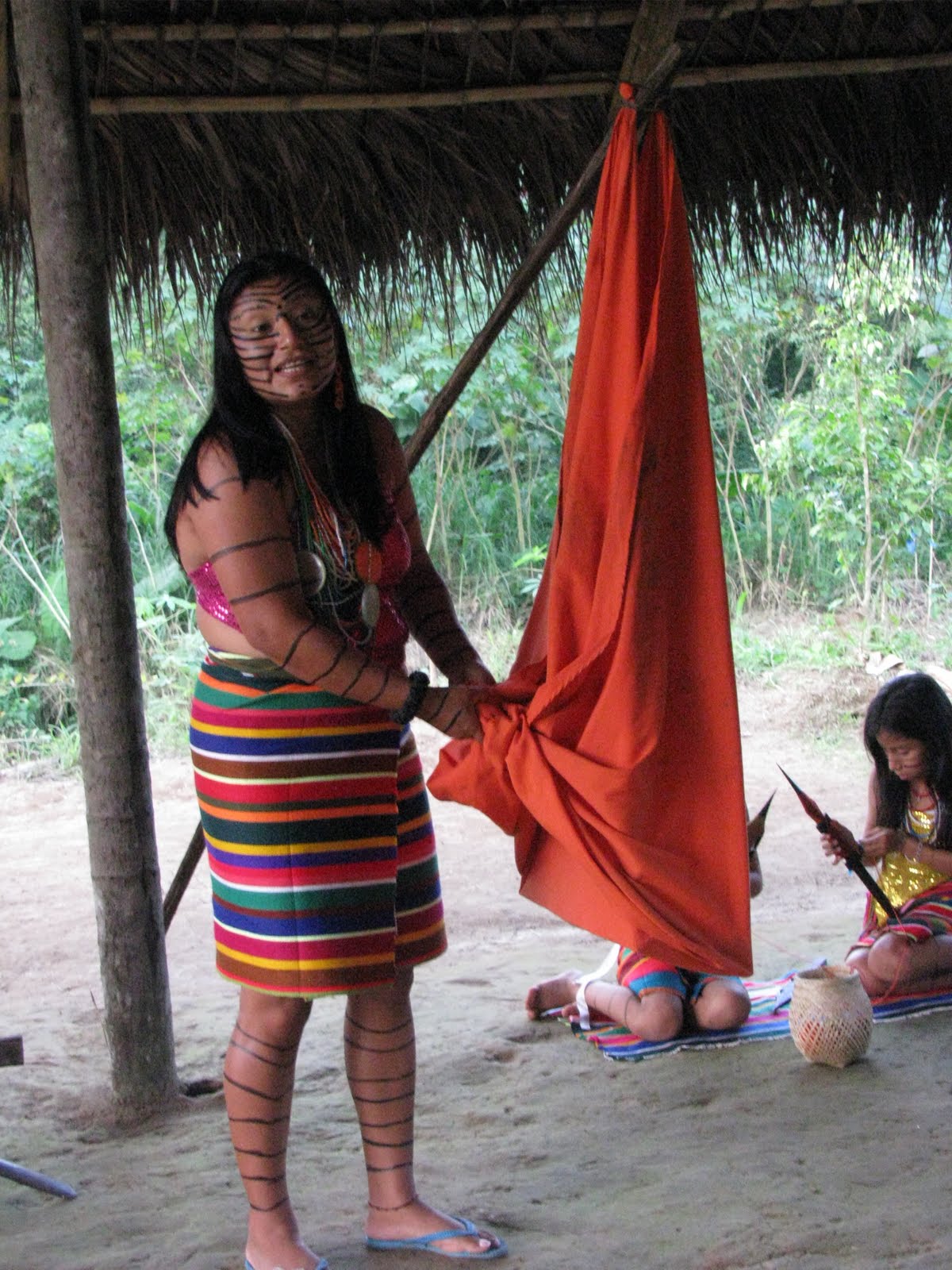

Traditional dress, the men wear a black and white cloth with the red waist band, symbolic of the snake, the women wear a multi colored cloth symbolic of the rainbow. The women weave these cloths and the weaving is beautiful. He is demonstrating a bird trap.


Trying our hand at throwing a spear. Good thing we can shop for our food because we might get real hungry if we had to hunt for food this way. You know what they say, vegetarian is another name for bad hunter.

Again I fell in love with the children. They are learning the ways of their people, classrooms have been built as part of this project and the children are learning "tsafiqui", their native language.

These leaves are used for cooking, the fish is wrapped in a leaf and placed on the fire to cook. Amazing how native peoples have learned to use the resources available for all their needs.

Tolon-Pele means the mythical tree. This tree is huge and the people appear to worship it. They say there is no other trees like it. They appear to be a spiritual people with a mixture of ancestor worship, nature worship and a belief in a Great Spirit. I found the tree interesting in two ways, 1. It reminided me Avatar and the Home Tree, and 2. I thought of the tree of life in Lehi´s dream.


Sampeling some of the sweet juice.


Dad got in on some of this action!


Extracting the sweet juice from a sugar cane. This seems to be more of a game than work.


The Tsa´chila are known as herbalists and their shamans are believed to have healing powers. They had a pot of various leaves cooking on the fire, in each hole was other leaves, the hot water was poured into the hole, then a hot rock from the fire was placed in the hole. The steam had a pleasant order, they indicated that one would sit with a blanket over them and breath the steam to cure illness. They do seem to have a great knowledge of the jungle plants and their uses.


When the Spanish arrived they brought with them smallpox, many of the indians died,a shaman prayed to the great spirit and the next morning the sun was shining on an achiote bush, the people took the seed pod and removed the berries inside, crushed them and then covered their bodies with the red juice. The death rate decreased and they felt this was an answer from the great spirit. Now the men in the tribe use the juice to color their hair in rememberance. The Spanish called them "los Colorados" because of the red skin. The area is known as Santo Domingo de los Colorados.


Our guide for the tour, the women wear tops for the tourists sake, there is only so much cultural shock one can be expected to deal with. This tribe was described in journals from the 1600´s but it wasn´t until the 1950´s that "civilzation" came to the Santo Domingo area with the building of roads. It was an isolated area because of the high mountains that had to be crossed to get here.

August 3, 2011

Again, following our first day of training we took a trip, this time we visited a Tsa´chila Indian Village. These little side trips are called cultural experiences and are part of what we provide for the teams that come to Ecuador to do projects. This is a village we had heard about and I was so excited to be able to go and see it. I was not disappointed, it was fabulous. The people are trying to preserve their culture and way of life, although it seems a hard way of life to me, so their children will know their roots and be proud of their hearitage. There were about 20,000 Tsa´chilas when the Spanish came, there are now 2,000 in 8 small reservations. Tsa´chila means "true people" or the "true word". Kind of makes me wonder if there are some Book of Mormon roots in their history. They took us through so many different aspects of their daily life, I´ll try to share some of it. I did do some vidios but this post is getting very long so I will post the vidio at a later time.

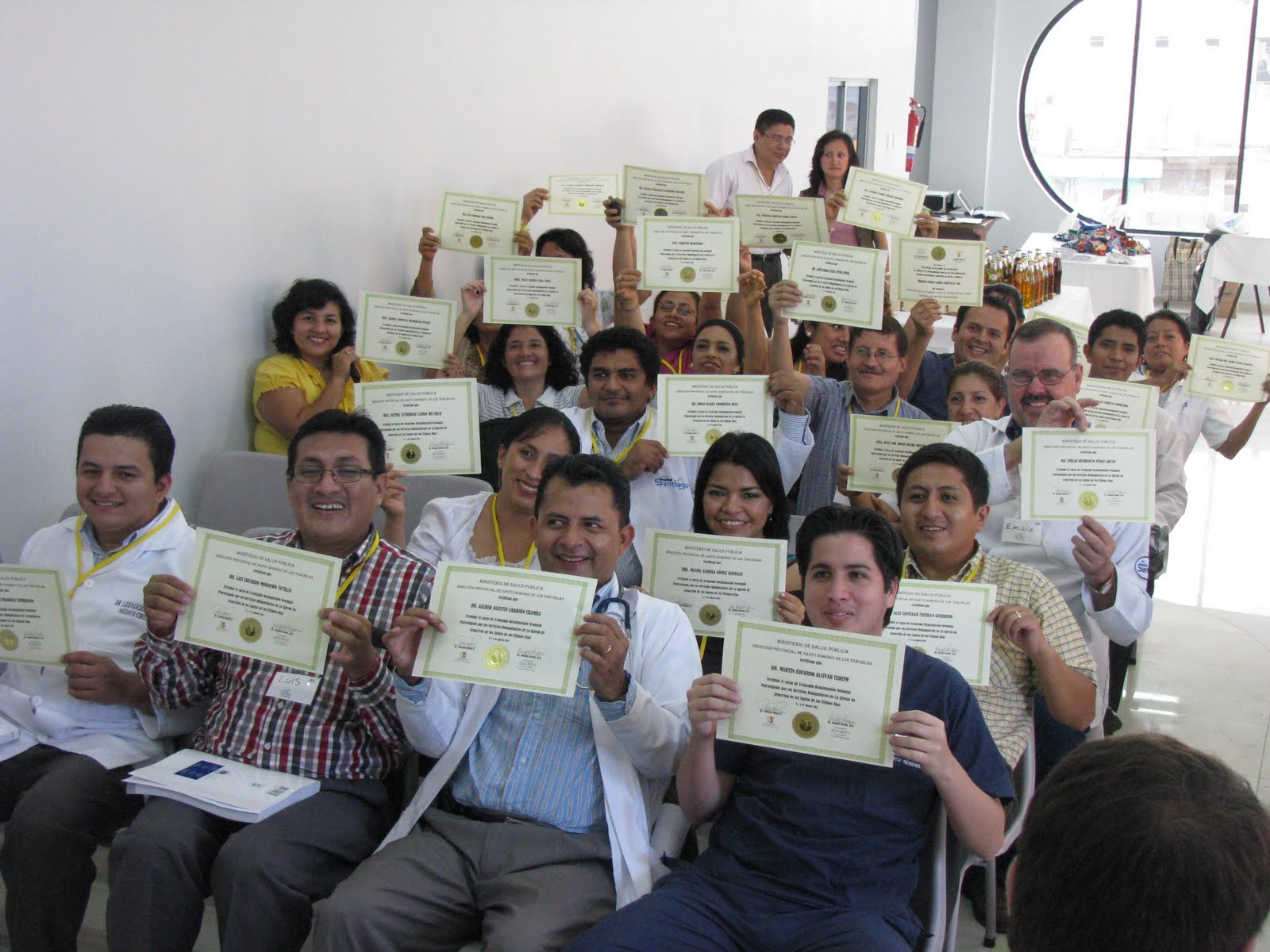
NRT SANTO DOMINGO


Another NRT course successfully completed. We will now be making plans for the course in 2012. They would like us to do it before we come home.


Final practical exam. The trainers create scenarios and each person has a turn to use the skills they have learned. Everyone must pass this part to complete the course.


I love the nurses here they are so professional looking.

Getting all of the supplies in and out is a task. We usually do not leave anything overnight, there is usually not elevators and we are usually on the 2nd or 3rd floor for some reason.


Santo Domingo is in the Quito Mission so we know many of the Elders and they were willing to come and help with the registration. They did a great job and things went very smooth. We were finished with registration quickly and started on time.


Stopping along the way for some coconut milk.

August 3-4, 2011

When we were done in Quevedo we loaded up and headed for Santo Domingo. Then we repeated the course for the next two days. These courses are very good and provide excellent training for the Doctors and Nurses, but my heart still likes the parteras (midwifes) we did when we first arrived. We are trying to get another partera course organized but are not having a lot of success.

GOIN´ BANANAS

A few views of the processing area, there were several processing areas throughout the plantation. We were told that there are 45 workers per shift to take care of all the banana plants (this plantation was hugh), and they are growing year round because there is no winter here. The whole process seems quite labor intensive as the work is done mostly by hand. Just putting in the seperators and covering the bananas seems like it would take a long time.


Enjoy your bananas we are!


Banana trees really are not trees in the sense that they produce year after year like an apple tree. Each plant only produces once then it sends out shoots. The workers choose the stongest shoot and let it grow meanwhile the old plant is cut down. It takes 9-12 months for a plant to produce. Notice in the pictures the old plants that have been cut down, and some of the new shoots coming up.


Ready for shipment. These bananas go all over the world, we saw labels for Italy and Argentiana.


The workers had gone home for the day so the gentelman that was showing us around showed us how they pack the bananas for shiping.


When the bananas are sorted any that are too small or too large are tossed aside, we were told that these are sent to Quito and Guayaquil.


Then they are placed an racks to dry and prepared for packing. They are sprayed with chemicals to keep them from ripeing.


They are then placed in large tubs of water to clean them and remove any insects or spiders.


The bunches of bananas are huge and I am sure very heavy. They are picked and hung on hooks for easier handeling.


Each tree produces 1 bunch of bananas. The bananas are seperated by a foam divider to help them grow properly and covered with plastic to protect them from insects and spiders.


August 1, 2011

After our first day of training we took a little trip to a banana plantation. This area of Ecuador is full of very large banana plantations. Next time you buy bananas take a look and see if they came from Ecuador. It was interesting to see the whole process and to actually get to be in among the plants not just taking pictures from a moving car.

NRT Quevedo

Everyone who passes receives a certificate upon completion of the course. I am pretty proud of the certificates, Dad and I design them and this time we took our printer with us so we could just print them up after we had the registration done. We have been told they are very nice and Sister Flake took our computer file with her to show in Salt Lake.


Following the training, equipment is donated to each hospital so they can continue training others.


We try at each location to have a local Doctor do some of the teaching.


After a concept is taught participants break into groups and practice.


Dad does the computer work and works with local people to make sure we get the names right for the certificates.


We had good press coverage and there was an artical in the newspaper the next day, this coverage helps people learn about the church, we hope it helps the missionaries.


Our NRT team for August 2011, Shelly, Refino, Nordell, Janet and Garry. We are packed up and ready to leave.

August 1-2, 2011

We are doing two more NRT courses this first week of August. Our first one was in Quevedo. Elder and Sister Flake, our short term specialists, arrived on Thursday night along with Rufino Rodriguez, a respiratory therapist, Dr. Nordell Brown and Dr. Shelly Reed arrived on Saturday night. We all attended church Sunday morning then went to the office packed up everything and were on our way. We stopped in Santo Domingo for lunch then continued to Quevedo. This NRT was much easier to put together then our first one because we knew better what we were doing. We had prepared the equipment, and had the certificates, name tags and test packets ready to go. There were 47 participants and the classes went well. These are good trainings and the equipment we use is donated to the hospital for future training.